Effort built your reputation. On its own, it will not build what comes after it.
A senior orthopaedic surgeon called me on a Sunday evening in July, not about a patient. Eighteen years into his practice, he wanted to know why his monthly income still depended almost entirely on how many hours he personally spent in his own OPD that month.
He was not struggling. His waiting room was full most weekdays. Referrals arrived steadily from three hospitals across the city. By every visible measure, his practice looked like a success story. The question still would not leave him alone.
I have heard a version of this question from doctors across India, in different specialties and different cities, more often than I expected when I first started noticing the pattern. The words vary. The shape of it does not. I am clinically better than I was ten years ago. Why does my practice not feel like it has grown at the same pace?
More often, the answer has little to do with clinical skill. It has to do with what carries that skill once it leaves the consultation room, and whether anything is carrying it at all.
In this piece I want to walk through two ways a doctor’s career can develop from here, what actually separates them, and the sequence I have seen work when a doctor decides to build the second one on purpose.
This is not an argument that effort does not matter. Yours built the reputation you have today, and nobody is asking you to work less carefully. It is an argument about what effort can and cannot do on its own, past a certain point in a career, and what an Ecosystem Doctor builds instead of working harder.
- Two types of doctors, and one real difference between them
- Why effort has a ceiling, and structure does not
- The plateau between years five and ten
- The four shifts that build an Ecosystem Doctor
- The growth sequence, and the value equation behind it
- What this looked like inside one practice
- The thirty day test
- Where to begin, this week
- Questions doctors ask me about this
This sits alongside the Medical Practice Systems series on jhalak.co.in, anchored by the pillar piece on the three invisible leaks draining every doctor’s practice. That series looks at where a doctor’s effort disappears inside a single consultation, through the Attention Leak, the Trust Leak, and what happens when more marketing meets a leaking pathway. This piece looks one level up, at why the practice around that consultation stops growing even when the effort inside it never stops.

Two types of doctors, and one real difference between them
I have started sorting doctors into two categories. Not by specialty, and not by how good they are clinically. By where their practice’s capacity actually lives.
The Effort Doctor
The Effort Doctor does almost everything personally. He sees every patient himself, remembers every follow-up himself, explains every plan himself, and often notices a problem in the front office before his own staff do. None of this comes from a lack of trust in his team. It comes from years of watching what happens when he does not check personally, and learning to check personally as a form of quality control.
The practice runs well because he is in it. That sentence looks like praise. It is also a complete description of the ceiling.
The Ecosystem Doctor
The Ecosystem Doctor has the same clinical depth, often built over the same number of years. The difference sits one layer below the consultation room. She has spent deliberate time building innovation into how a patient problem gets solved, systems that carry a decision the same way twice, a team trained to make some of those decisions without her, and technology that quietly does the remembering her own memory used to carry.
Her practice also runs well because of her. The difference is that it keeps running reasonably well for a stretch of time without her, and that single fact changes almost everything about how the practice can grow.
“If I am not in the clinic, the day slows down.”
Capacity lives inside one person’s calendar.
“If I am not in the clinic, the day still runs. It just runs without my judgement for that stretch.”
Capacity lives inside a structure the person built.
| What you are looking at | Effort Doctor | Ecosystem Doctor |
|---|---|---|
| Where capacity lives | Inside the doctor’s own hours | Inside systems, team, and technology the doctor built |
| What happens on leave | Income and follow-up both slow down | Slows less, because the pathway does not depend entirely on one calendar |
| How growth happens | By adding more personal hours | By adding structure that carries more without adding hours |
| What compounds | Fatigue, mostly | Reputation, referral patterns, and the practice’s own memory |
Neither doctor is more caring than the other. Neither is more skilled. The Effort Doctor is often the more exhausted of the two precisely because he is the more conscientious one, and conscientiousness without structure means carrying more of the load personally, for longer.
Why effort has a ceiling, and structure does not
Think of your professional energy as a reservoir. Your time, your clinical judgement, your emotional presence and your attention all enter the practice each day. I have written elsewhere in this series about where that reservoir leaks out through gaps in a single consultation. Here I want to look at a different kind of loss. What happens to that same reservoir once you try to make the whole practice bigger.
The Competence Trap, one level up
A capable doctor can grow a practice’s revenue for years through sheer additional hours. Add a Saturday clinic. Take fewer holidays. Answer patient calls personally at nine at night. Each of these works, in the narrow sense that the number goes up. Each of them also hides the same structural gap for another year, because your own competence is doing the work that a system should be doing instead.
This is the same Competence Trap I have described inside the consultation room, applied to the practice as a whole. The more capable you are at compensating personally, the longer a practice can grow without ever building anything that would let it grow without you.
What effort cannot buy
Effort can buy you a fuller day. It cannot buy a second location that runs to your standard without you present in it. It cannot buy a junior doctor who can make a decision the way you would, because that requires a documented pathway, not just your own instinct. It cannot buy a personal brand that survives a month of your own unavailability, because a brand built entirely on presence disappears the moment presence stops.
Structure buys all three. Not instead of your clinical skill. On top of it.
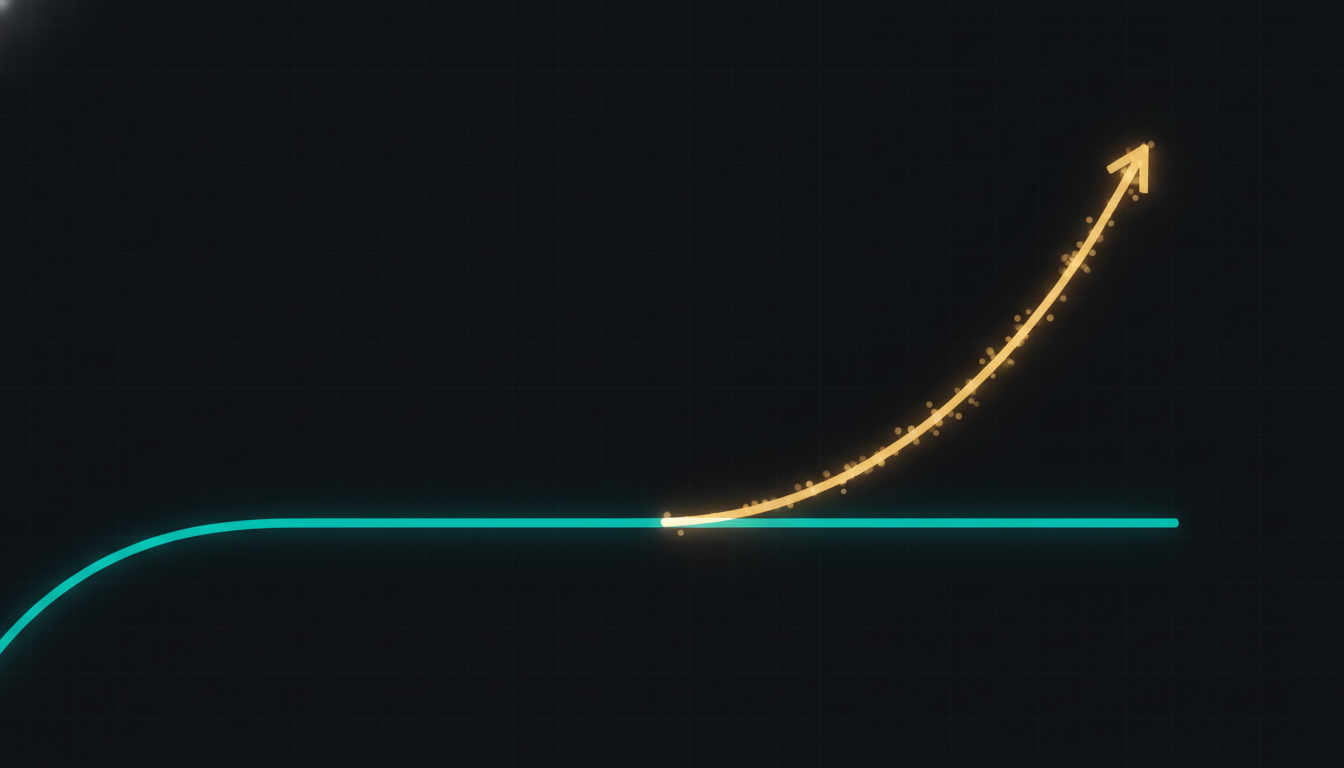
The plateau between years five and ten
Across the specialties I have worked with, one pattern repeats more often than any other. Somewhere between year five and year ten of practice, growth that once felt automatic starts to flatten, even though the doctor’s clinical ability keeps improving every year after that point.
Why the early years hide this
In the first few years, almost any additional effort produces visible growth. A new referral relationship, a slightly longer working day, a better bedside manner than the doctor down the corridor. Growth and effort move together closely enough that nobody has a reason to separate them.
What the plateau is actually telling you
By year five or six, most of the easy effort has already been spent. The doctor is already working close to full capacity. Referral relationships have matured. What used to move the number, more hours, more personal attention, more availability, now barely moves it at all, because there is little more of any of those things left to give.
The plateau is not a verdict on your skill. It is closer to a message. The lever you have been pulling for five years has reached the end of its travel. A different lever exists. Most doctors have never been shown it.
The four shifts that build an Ecosystem Doctor
An Ecosystem Doctor is not a personality type. It is the result of four specific shifts, made deliberately, usually one at a time rather than all at once.
| Shift | What it replaces | What it becomes |
|---|---|---|
| Innovation | Doing the same consultation the same way for years | A named, repeatable approach to one problem you solve better than most |
| Systems | Holding the pathway in your own memory | A written pathway your front desk and your future self can both follow |
| Team | Trusting people, then re-checking everything yourself anyway | Training people to make specific decisions without you, on purpose |
| Technology | Being the one who remembers every follow-up | A quiet assistant that remembers on your behalf, between visits |
Technology as a silent assistant, not a new burden
The word technology makes some doctors picture one more screen to manage. Inside the Super Doctor system, we treat it the opposite way. Modernisation without chaos. Technology’s job is to support you between consultations, quietly, not to demand attention during them. The tool that adds a task to your day has failed at this. The one that removes one from your memory has succeeded.
The growth sequence, and the value equation behind it
Doctors sometimes ask me to point at the single change that would matter most. There rarely is one. There is a sequence, and skipping ahead in it is the most common way I have seen a doctor’s own good intentions go nowhere.
The ten stages, in order
- Experience. The years already behind you. This part is done.
- Insight. Noticing a pattern in what actually works, not just what you were taught.
- Innovation. Turning that insight into a repeatable approach.
- Methodology. Writing that approach down clearly enough that someone else could follow it.
- Differentiation. Becoming known for that one approach specifically, not for general excellence.
- Authority. Other doctors and patients start referring to your method by name.
- Ecosystem. Systems, team, and technology now carry parts of the method without you present.
- Impact. More patients are reached through the ecosystem than your own calendar could ever reach alone.
- Scale. The ecosystem extends, a second site, a trained associate, a licensed method.
- Wealth. The financial result of the previous nine stages, never the starting point of any of them.

Most doctors I meet are trying to reach stage ten from stage one, by working harder inside stage one. Effort at that stage cannot skip you past insight, methodology, and differentiation. It can only make stage one more tiring.
The value equation
The value equation: effectiveness plus efficiency plus appropriate speed. Premium pricing follows premium value. It rarely works the other way around, whatever the fee structure says.
An Effort Doctor tries to raise value by adding more of himself, more time, more attention, more availability. An Ecosystem Doctor raises the same three variables, effectiveness, efficiency, and appropriate speed, through the structure around him instead, which is precisely why the second path can keep improving long after the first one has already used up all the hours in a week.
What this looked like inside one practice
A senior dermatologist I worked with had built a genuinely strong reputation over fourteen years, entirely on her own clinical judgement and a reliably full appointment book. She came to me not because anything was failing, but because she had started to notice that a slightly quieter month now worried her more than it used to, and she could not say exactly why.
When we mapped her practice, the pattern was familiar. Every patient decision, every borderline case, every staff question about scheduling routed through her personally, all day, every working day. Her two assistant doctors were capable, but neither had ever been given a written protocol for the handful of decisions that came up most often. So they asked her instead, correctly, because asking her was safer than guessing.
We picked one shift to start with, not all four. Systems. We wrote a one-page decision protocol for the eight questions her assistants asked most often, tested it for a month, and corrected it twice based on what it missed. Nothing about her own clinical work changed. What changed was that a predictable slice of her day no longer required her personal presence to move forward. That is a small change on paper. Inside a practice that had never had one before, it was the first thread of an ecosystem rather than an extension of one person’s effort.
The thirty day test
Here is the test I ask doctors to sit with honestly, usually before we discuss anything else. If your clinic stops performing the moment you stop working, you do not yet have an ecosystem. You have a highly successful job.
The three questions this test actually asks
What would genuinely happen to your practice if you were unreachable for thirty days, not on holiday with your phone nearby, but truly unreachable. Would follow-up continue on schedule, or would it wait for you. Would a new patient enquiry be handled the same way it is handled today, or would it wait until you returned.
This connects to a wider theme in OPD to Ecosystem, the book I wrote on exactly this shift, structured across nine chapters and a closing framework, moving from awareness, to structural design, to evolution. The quiet reason a practice keeps depending on its doctor and the moment a doctor becomes the practice’s own bottleneck are two of the ideas the book walks through in more depth than one article can.
Where to begin, this week
Do not attempt all four shifts, innovation, systems, team, and technology, in the same month. Pick the one where your own answer to the reflection below made you slightly uncomfortable.
| If this describes your practice | Start with | Change one thing |
|---|---|---|
| You solve the same problem well, but nobody would recognise your approach as a named method | Innovation | Write down your own approach to your single most common case, in your own words |
| The pathway for a routine case only exists in your head | Systems | Turn your eight most repeated decisions into a one-page protocol |
| Your team checks with you even on the easy cases | Team | Hand one specific, low-risk decision to a team member this month, in writing |
| You are the one who remembers every follow-up | Technology | Move one recurring reminder out of your own memory and into a system |
- If I disappeared for thirty days, which part of my practice would stop first?
- How many decisions this week could only have been made by me, and how many of those genuinely needed to be?
- Is there a written version of how I handle my most common case, or does it only exist in my head?
- Have I trained my team to make decisions without me, or only to check with me faster?
Doctor, think about this. You became a better doctor every year of your career. Did you build a better business every year alongside it? If the honest answer is no, that gap is not a character flaw. It is the part of the profession nobody trained you for.
One question worth sitting with before your next working week begins. If nothing about how your practice is structured changes for the next ten years, what will it keep asking of you? More hours, the way it has so far, or a different kind of growth that no longer asks for them?
Questions doctors ask me about this
Is being an Effort Doctor a mistake?
No. Almost every strong Ecosystem Doctor I have worked with spent years as an Effort Doctor first, and that period is usually where the clinical depth and reputation came from. The mistake is only in staying there past the point where effort stops moving the number, and mistaking more of the same for a strategy.
How do I know which of the four shifts to start with?
Start with whichever one made you hesitate longest in the self-check above. Most doctors I meet have one shift that is genuinely further behind than the other three, and closing that gap first tends to matter more than touching all four lightly.
My practice is growing fine right now. Why think about this at all?
Because the plateau between years five and ten rarely announces itself in advance. The doctors I have seen hit it hardest were often the ones whose growth had looked the healthiest the year before, because nothing had yet forced them to ask where that growth was actually coming from.
Does building systems mean I see patients less personally?
Not in my experience. The dermatologist in this piece did not change how she treats a single patient. She changed who could handle the routine majority of decisions around that treatment, which left her more attention, not less, for the cases that genuinely needed her judgement.
How long does this kind of change actually take?
One shift, tackled deliberately, can show a difference within a single quarter. Rebuilding the doctor, the systems, the personal brand, and the business together, so they move as one ecosystem, realistically takes 18 to 24 months in my experience, even though early progress usually shows up sooner than that.
Is this only relevant to doctors who want to expand to a second clinic?
No. Most of the doctors I work with through Jhalak Education have no interest in a second location. The same four shifts still matter inside one clinic, because the goal is never size alone. It is a practice that no longer depends on one person’s presence each day.
Where does the 8P Business Model fit into all this?
The four shifts described here sit inside the wider 8P Business Model, the framework the Super Doctor system is built on. This article covers the identity shift behind that model. The model itself, and how each of its parts fits together, is a longer piece for another day.
The full framework is in the book
Effort Doctor versus Ecosystem Doctor, the growth sequence, and the 8P Business Model behind the Super Doctor system are laid out across all nine chapters of OPD to Ecosystem on the book page.
Get it on Amazon IndiaAmazon USWant to see where your own practice sits on this?
15 minutes. Zero sales pressure. Just a clear, honest plan for your practice, and which of the four shifts to start with first.
Book your free strategy call
Doctor brand architect. He works with experienced specialist doctors across India to move their practices from effort-based work toward structured medical ecosystems, using the 8P Business Model, disease-specific positioning, and Habit-Based Treatment. He is the author of OPD to Ecosystem and the creator of the Super Doctor system. More on doctor business growth or follow him on Instagram.